Commissioning an IVF Laboratory: What to Verify Before the First Patient Cycle

A practical look at the checks, workflows and environmental controls that matter before an IVF laboratory begins clinical work.
From a project perspective, an IVF laboratory may look complete once the rooms are built, the equipment is installed and utilities are connected. From a clinical perspective, however, the laboratory is not ready until the environment, workflows and devices have been shown to support safe, repeatable practice.
Commissioning is the stage where design intent is translated into verified operational readiness. For clinic managers and laboratory teams, a structured commissioning phase reduces avoidable delays, protects patients and gives staff confidence before the first treatment cycle begins.
Start with the process, not the floorplan
A common mistake is to focus on whether every item has been delivered rather than whether every critical process can be performed reliably. Before opening, map the full patient and sample journey: admission, gamete handling, insemination or ICSI, embryo culture, cryopreservation, storage, witnessing, reporting and waste disposal.
This exercise often reveals practical gaps that are not obvious on a layout drawing. These may include insufficient bench space at peak activity, awkward movement between clean and non-clean areas, poor sight lines between workstations, or documentation steps that interrupt aseptic handling. Commissioning should test the real workflow under realistic conditions, not simply confirm that rooms look finished.
Verify the room environment under working conditions
Environmental performance should be assessed when systems are operating as they will during routine use. Temperature stability, humidity where relevant, room pressurisation, air change performance and recovery after door opening all affect laboratory consistency.
It is also important to check whether the laboratory remains stable during busy periods. Heat loads from equipment, staff occupancy and lighting can alter room conditions more than expected. If the room performs well when empty but drifts once incubators, microscopes and cabinets are in use, that issue is better discovered before patients are scheduled.
Confirm utility quality and resilience
Many laboratory problems originate not in the instrument itself but in the gases, power supply or water feeding it. During commissioning, verify gas identity, pressure stability, alarm function, connection integrity and switchover arrangements where manifolds or backup cylinders are used.
Electrical resilience deserves equal attention. Teams should test what happens during power interruption, restart and transfer to backup systems. Critical questions include whether alarms remain active, whether monitoring continues to log data, and how long key equipment takes to recover to specification. A written response plan for utility failure should exist before clinical work begins.
Test equipment as a connected system
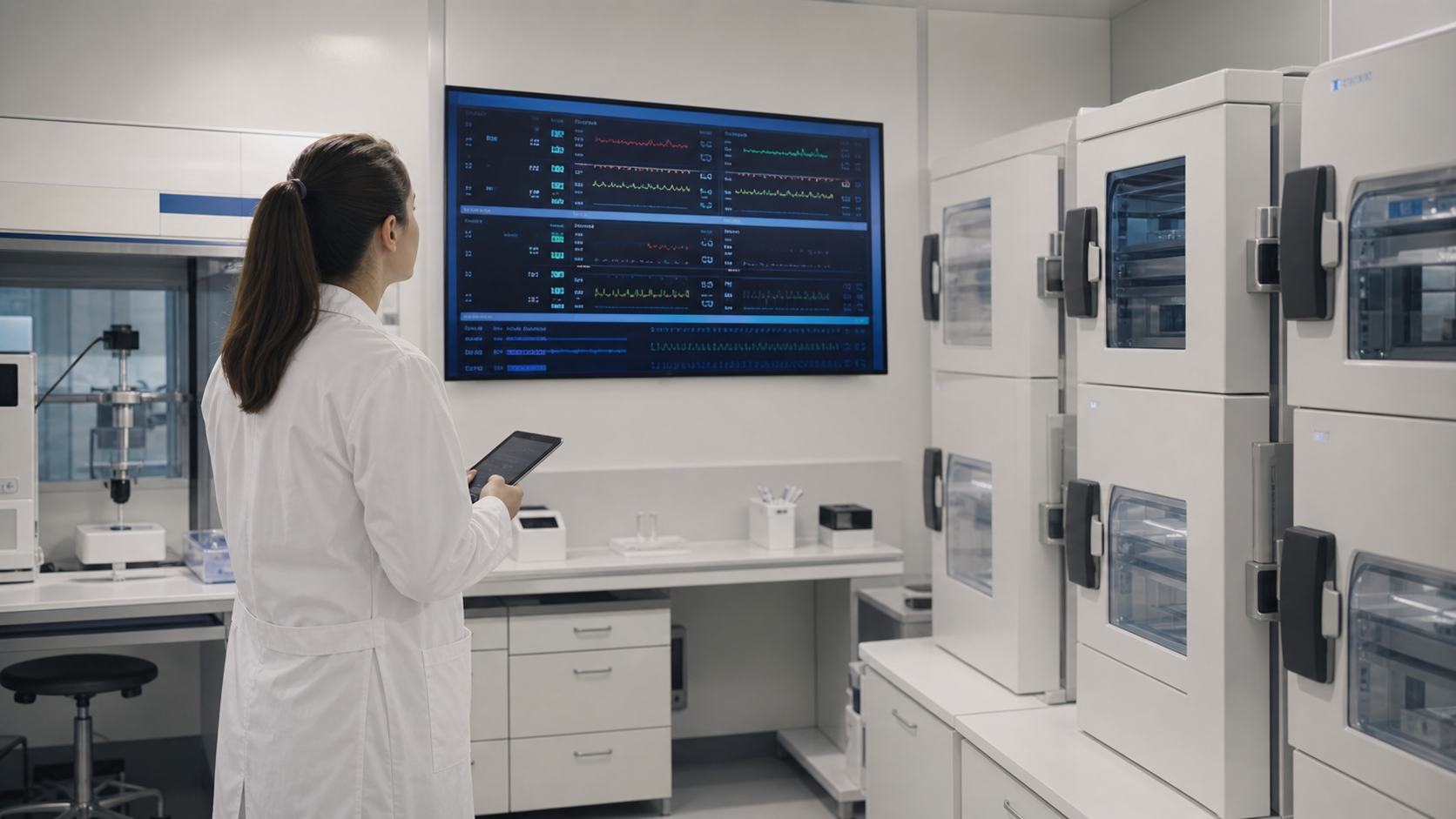
Individual devices may pass installation and operational checks yet still create problems when used together. Incubators, warming surfaces, witness systems, alarm platforms, gas supplies and cryostorage monitoring should therefore be reviewed as an integrated laboratory system.
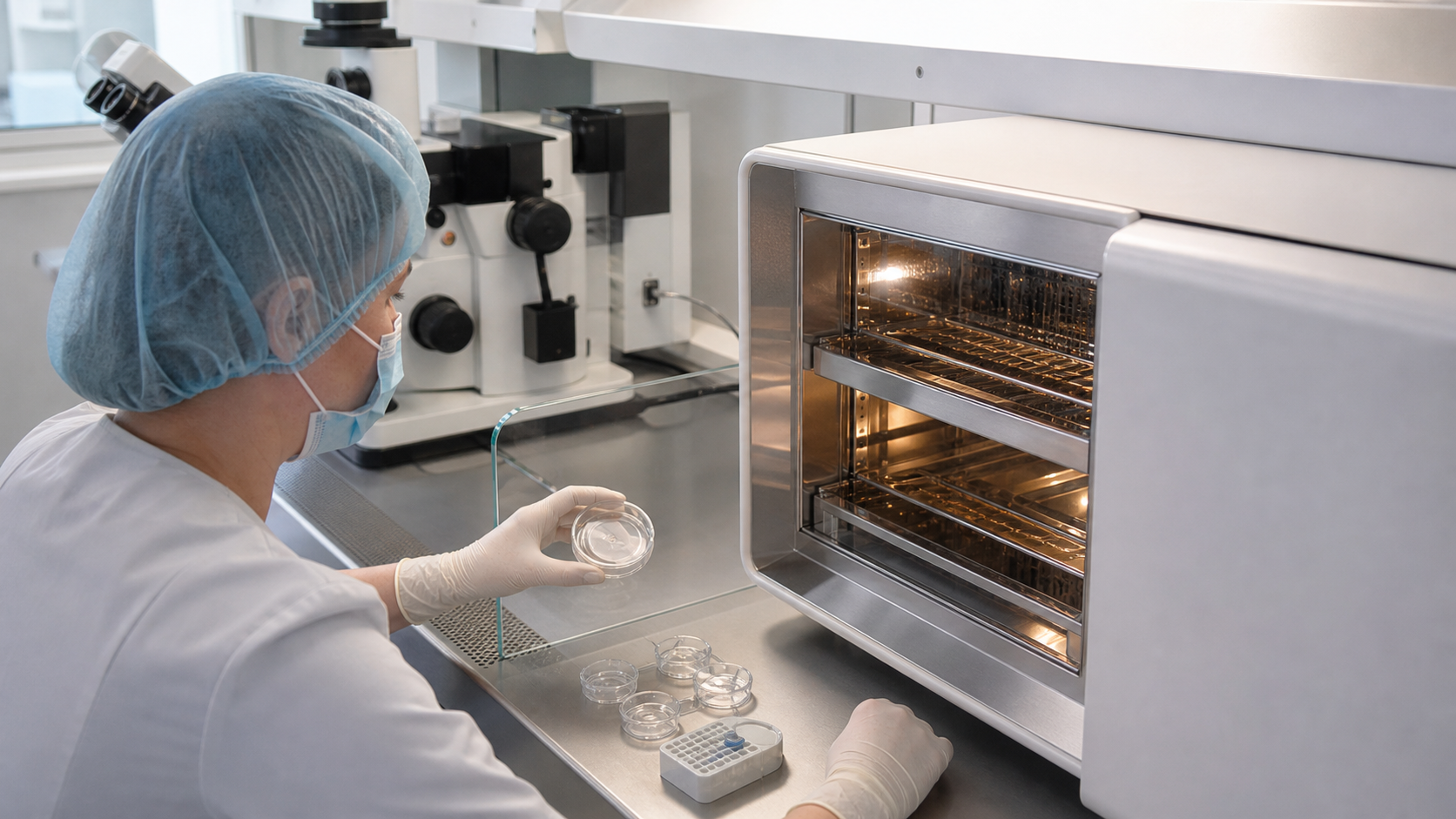
For example, if dishes are prepared in one area and transferred through several zones before culture, the team should assess how long samples remain outside controlled conditions. If alarm notifications are configured, commissioning should verify not only that an alarm triggers locally, but that it reaches the right person, in the right format, at the right time.
Run simulations before real cases
A dry run using non-clinical materials is one of the most valuable commissioning tools. Simulated patient cycles allow the team to test timing, traceability, handovers, equipment availability and exception handling without clinical risk.
These exercises should include both routine and non-routine scenarios: simultaneous procedures, labelling corrections, delayed specimen arrival, instrument fault, cryostorage access, and after-hours alarm response. Simulation often identifies small weaknesses in SOPs that would otherwise only appear under pressure.
Make documentation usable, not just complete
By the time a laboratory opens, SOPs, logs, forms and maintenance records should do more than satisfy auditors. They should support clear, consistent work at the bench. Overly complex forms or ambiguous instructions increase the chance of variation, especially during busy sessions.
Commissioning is the right moment to test whether documentation matches actual practice. If staff repeatedly work around a form or seek clarification on the same instruction, the document probably needs revision. Useful quality documentation is practical, accessible and aligned with the workflow it governs.
Assess staff readiness as well as equipment readiness
A technically complete laboratory is not clinically ready if staff are still learning where materials are stored, how alarms escalate or which contingency route applies during disruption. Training should therefore cover not only device operation, but the laboratory's specific processes, room logic and communication pathways.
Competency assessment should include witnessing steps, aseptic technique, cleaning methods, culture handling, traceability and emergency actions. Where new staff are joining a new facility, the interaction between people, equipment and process deserves as much attention as any engineering check.
Define the go-live criteria clearly
Opening dates are sometimes driven by project timelines rather than objective readiness. A better approach is to define in advance what must be true before the first patient cycle can proceed. These criteria might include completed environmental verification, approved SOPs, successful dry runs, calibrated equipment, active monitoring, trained staff and signed contingency procedures.
A formal go-live review helps separate what is essential from what is merely desirable. It also creates a clear record that the organisation has considered safety, performance and continuity before entering clinical service.
A well-commissioned IVF laboratory begins with fewer surprises and a stronger foundation for quality. If support is needed when planning or equipping a new facility, tech²ART can help.