Alarm Management in the IVF Laboratory: Turning Alerts into Actionable Control
A practical guide to structuring equipment alarms so IVF labs respond faster, reduce nuisance alerts and protect culture conditions.
Why alarm management deserves more attention
In many IVF laboratories, alarms are treated as a technical feature rather than a controlled process. Yet alarms from incubators, gas supply systems, cryostorage monitoring, refrigerators, freezers and room environmental sensors all compete for attention during busy clinical work. If too many alerts are non-critical, delayed or poorly routed, genuinely important deviations can be missed or accepted as background noise.
For embryo culture and cryopreservation, time matters. A temperature drift, CO₂ supply failure or liquid nitrogen level problem may begin as a small deviation and become a patient-affecting event if the response is slow. A structured alarm strategy helps laboratories move from passive notification to active risk control.
Start with risk, not with settings
An effective alarm system begins by asking which deviations matter most to sample safety, culture stability and continuity of service. Not every parameter needs the same level of urgency. A brief door-open event on a refrigerator does not carry the same risk as a prolonged incubator temperature deviation or cryotank level alarm.
A simple risk-based review can classify alarms by potential impact, speed of harm and required response time. This makes it easier to define which alarms should be audible locally, escalated remotely, acknowledged by named staff or linked to an immediate contingency action. It also prevents overloading the team with notifications that add little practical value.
Define alarm priorities clearly
Many laboratories benefit from assigning alarms to categories such as critical, urgent and advisory. Critical alarms are those where immediate intervention is needed to protect embryos, gametes or stored specimens. Urgent alarms may require action within a defined timeframe but do not indicate immediate loss of control. Advisory alerts may highlight trends, maintenance needs or operator actions that should be reviewed during routine work.
The important point is consistency. Staff should not have to interpret severity differently depending on shift, room or equipment brand. Alarm labels, colour coding, escalation rules and expected response times should be standardised as far as possible across the laboratory.
Reduce nuisance alarms
Frequent non-actionable alarms are one of the most common weaknesses in laboratory monitoring. They arise from thresholds set too tightly, short delays, poorly positioned probes, routine operational disturbances or sensors that have not been maintained properly. Over time, staff may silence, postpone or mentally filter alarms that appear repeatedly without consequence.
Reducing nuisance alarms does not mean loosening control blindly. It means reviewing historical alarm data and understanding what is driving repeat events. For example, a CO₂ incubator alarm may trigger repeatedly during predictable loading periods, suggesting that delay settings or workflow need adjustment. The goal is to preserve sensitivity to real failures while minimising avoidable noise.
Make response responsibilities unambiguous
An alarm is only useful if someone knows what to do next. Each critical device or system should have a documented response pathway: who receives the alert, who investigates first, when backup staff are contacted and what interim steps protect samples while the cause is assessed.
This is particularly important outside normal hours. Remote notifications are valuable, but only if contact lists are current, escalation is tested and responders can reach the laboratory or direct action quickly. Clear call-out arrangements, spare gas cylinders, backup incubator capacity and emergency transfer plans all form part of alarm management, not separate issues.
Use alarm data for improvement
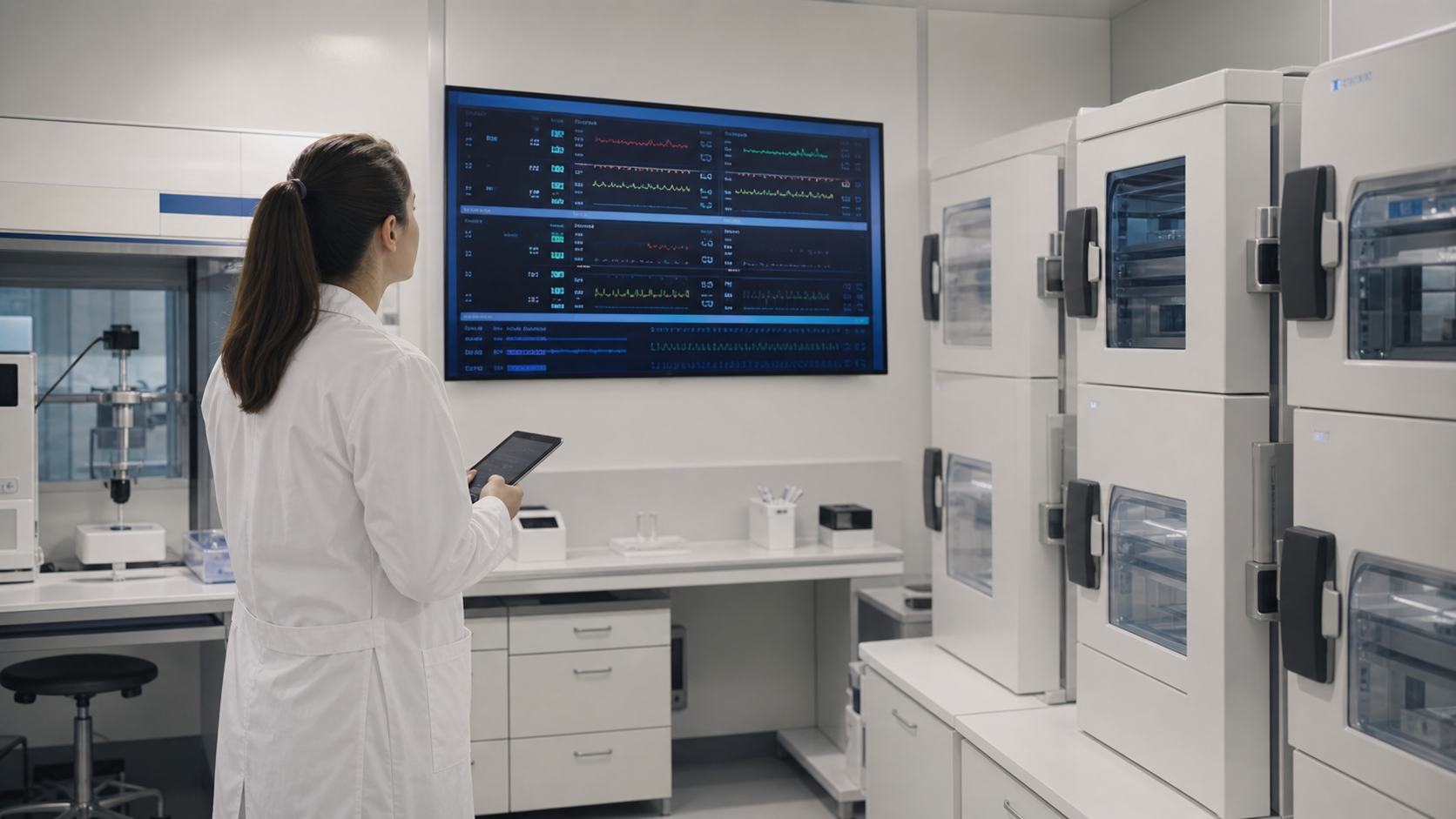
Alarm records are a rich source of operational information. Reviewing them monthly or quarterly can reveal recurring instability, maintenance gaps, training issues or weak points in workflow. A cluster of incubator door alarms may indicate poor access planning. Repeated low-pressure gas alerts may point to cylinder change practices or supply sizing. Cryostorage alerts may reveal the need for revised refill schedules or sensor replacement.
Trend review also supports quality management. It provides objective evidence for CAPA, equipment performance review and risk reassessment. In accredited or regulated environments, being able to show not only that alarms exist, but that they are reviewed and acted upon systematically, is increasingly important.
Test the process, not just the device
Routine verification should include more than checking whether an alarm sounds. Laboratories should confirm that the full pathway works: detection, local notification, remote transmission, acknowledgement, escalation and documented response. This is especially relevant after software updates, service work, network changes or relocation of equipment.
Scenario-based drills can be useful. Examples include simulated mains power loss, CO₂ supply interruption or cryotank alarm escalation out of hours. These exercises often uncover practical issues that are not visible in SOPs, such as unclear authority to move samples or delays in accessing backup areas.
Keep documentation usable
Alarm management documents should be simple enough to use under pressure. For each critical system, staff need rapid access to alarm set-points, priority level, likely causes, immediate actions, escalation contacts and event recording requirements. If instructions are too long or fragmented across multiple files, response quality will suffer.
Training matters just as much as documentation. New staff should understand not only how to acknowledge an alert, but why different alarms are prioritised differently and how their actions affect sample safety.
A small system with a large effect
Alarm management rarely attracts the same attention as new equipment purchases or laboratory expansion, but it has a direct influence on resilience. Well-designed alarms support faster decisions, calmer out-of-hours response and better protection of critical culture and storage conditions.
For IVF laboratories in particular, the best alarm systems are those that staff trust: sensitive to meaningful deviations, quiet when they should be, and always linked to a clear action. tech²ART can help laboratories review equipment monitoring and alarm strategies as part of a broader quality and workflow approach.