Preventive Maintenance in IVF and Diagnostic Laboratories: Turning Downtime into a Managed Risk
A practical look at preventive maintenance that protects uptime, data quality and environmental stability in IVF and diagnostic labs.
Why maintenance deserves more attention
In IVF and diagnostic laboratories, equipment failure is rarely a simple technical inconvenience. A drifting CO₂ sensor, unstable cabinet airflow, blocked analyser tubing or delayed calibration can affect specimen integrity, embryo culture conditions, turnaround times and ultimately clinical confidence. Preventive maintenance is therefore not only an engineering task; it is part of laboratory risk control.
Many laboratories still approach maintenance reactively, especially when budgets are tight and instruments appear to be functioning normally. The difficulty is that performance decline is often gradual. By the time an issue becomes visible in results, culture conditions or alarms, the laboratory may already be dealing with avoidable disruption.
From calendar task to risk-based plan
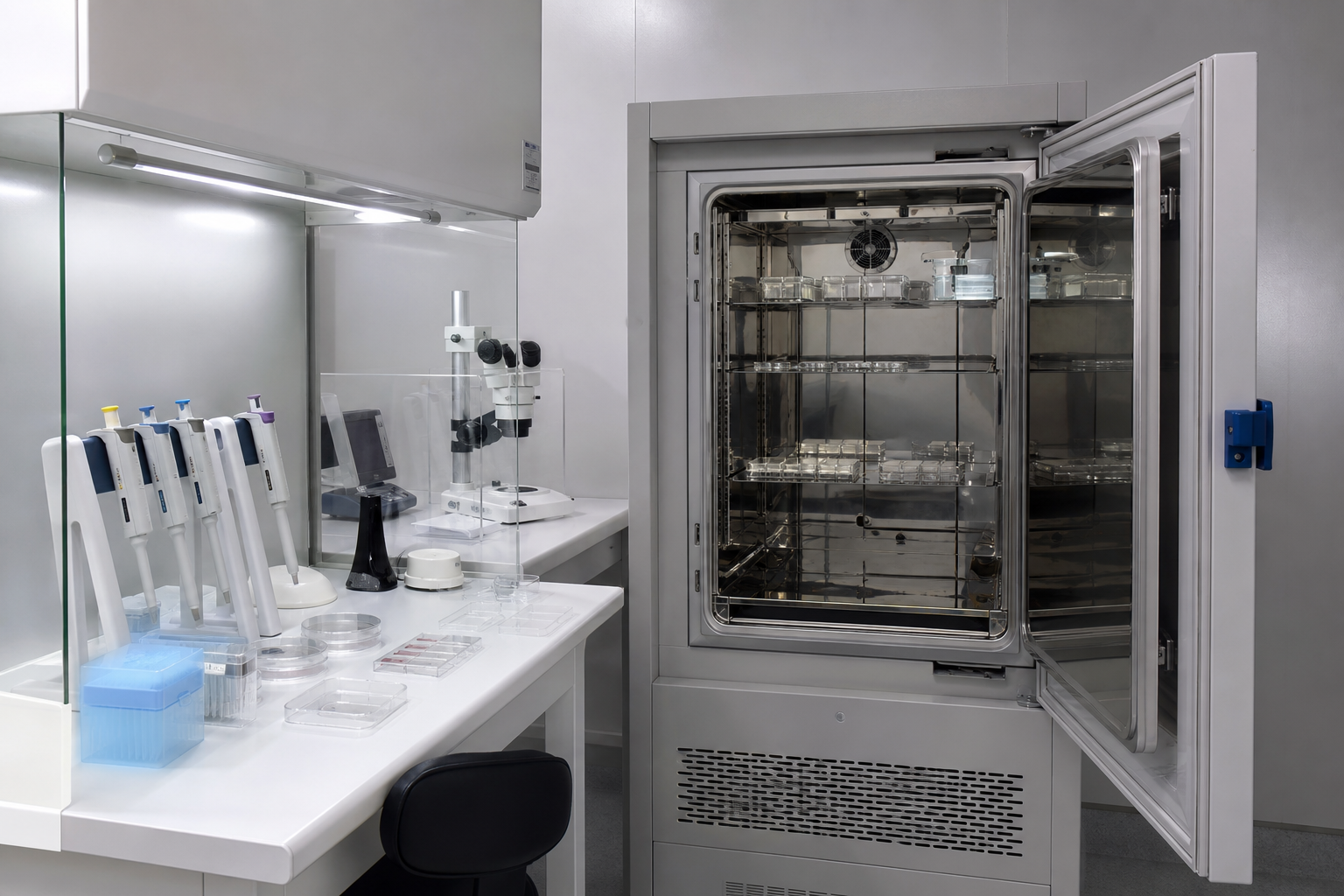
A useful maintenance programme starts by separating equipment by criticality. Devices that directly influence embryo development, sample safety, environmental control or reportable results should sit in the highest-risk category. This usually includes incubators, biosafety cabinets, gas mixers, freezers, cryostorage monitoring systems and in vitro diagnostic analysers.
Once criticality is defined, maintenance intervals should not rely only on manufacturer recommendations. They should also reflect actual workload, room conditions, utility stability and the consequences of failure. A tri-gas mixer serving multiple incubators, for example, may justify closer review than an identical unit used only intermittently.
What good preventive maintenance includes
Effective maintenance is broader than replacing parts during an annual visit. It should cover inspection, cleaning, calibration checks, sensor verification, software and alarm review where relevant, and confirmation that the equipment still performs within the laboratory’s accepted limits. For devices with environmental influence, it should also confirm recovery behaviour after door opening, power interruption or routine handling.
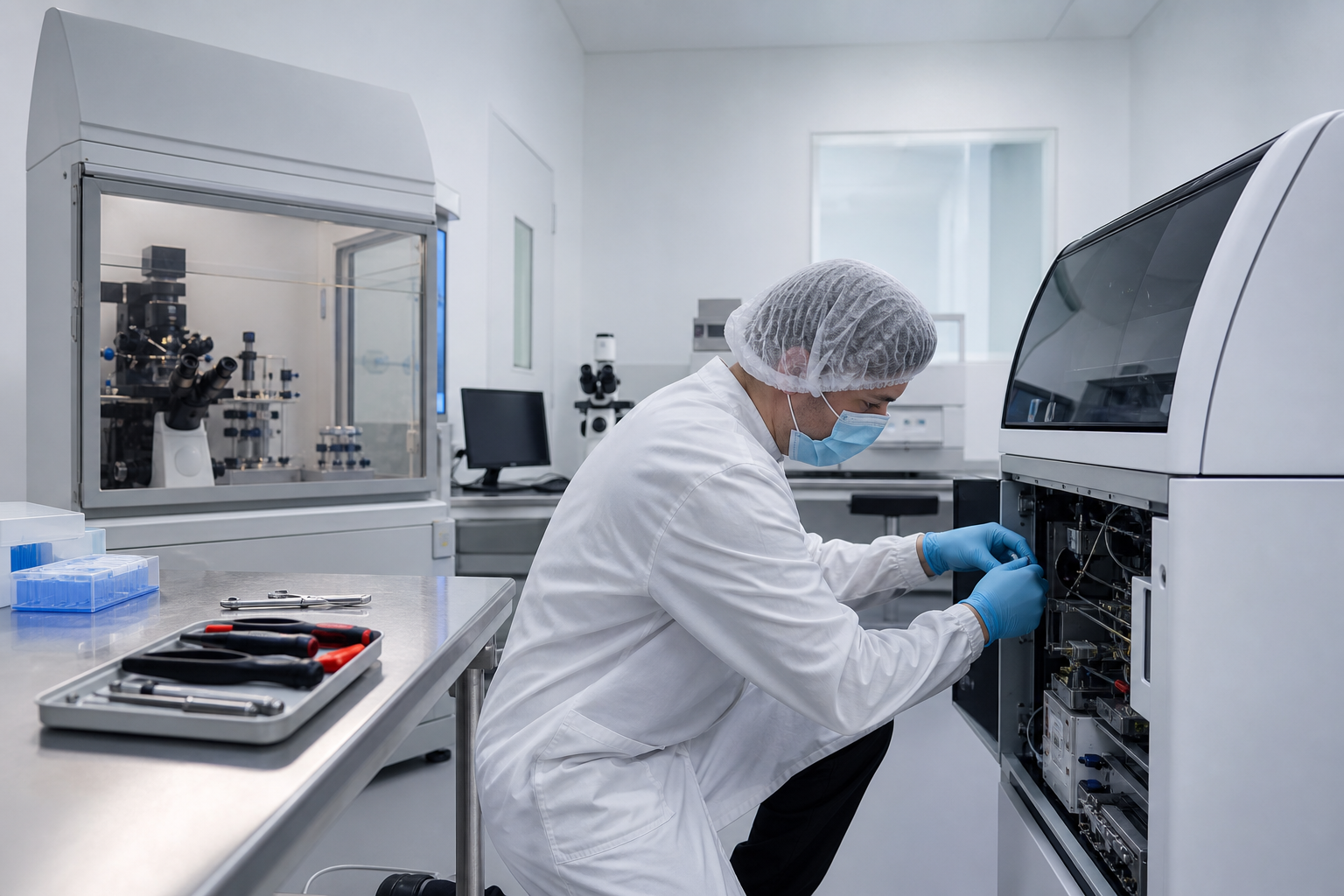
Laboratories should be clear about which activities are performed by users, which by in-house technical staff and which by authorised service providers. User-level tasks such as filter checks, external cleaning, drain inspection and basic alarm tests are often overlooked, yet they are the first line of defence against preventable faults.
Maintenance and compliance are closely linked
A maintenance record should demonstrate more than the date of a service visit. It should show what was tested, which parts were replaced, what as-found and as-left conditions were observed, whether calibrations were traceable where required, and whether any deviation triggered follow-up action. This level of documentation is valuable during audits and equally valuable when investigating an unexpected laboratory event.
For accredited or regulated laboratories, maintenance also links directly to change control. Replacing a sensor, updating firmware or moving an instrument may affect performance status and may require functional checks before routine use resumes. A maintenance programme that ignores post-service verification creates a compliance gap and an operational one.
Planning around the real workflow
The best maintenance plans are designed around laboratory activity, not around a generic service calendar. In IVF, this means avoiding unnecessary intervention during sensitive culture periods, coordinating work outside retrieval and transfer peaks, and ensuring contingency capacity before any critical device is taken offline. In diagnostic settings, it means aligning service windows with sample demand and staffing levels.
Backup planning is part of maintenance, not separate from it. If one incubator, cabinet or analyser is unavailable, the laboratory should already know where work will be redirected, what checks are needed before transfer, and who has authority to make the decision. That preparation can prevent rushed judgement when a fault occurs under pressure.
Using maintenance data to spot patterns
Service reports, alarm logs and repeated minor faults can reveal trends long before a major breakdown. Frequent gas instability, repeated temperature adjustment, unusual fan noise or recurring analyser clogs may indicate a wider issue with utilities, operator practice or environmental conditions rather than a single defective part.
Reviewing these patterns quarterly can be surprisingly useful. It helps managers decide whether an instrument is still reliable, whether spare parts should be held on site, and whether replacement planning should begin before failure forces an urgent purchase. This is particularly important for older equipment where service support or components may become less predictable.
The human factor
Even a strong service contract cannot compensate for weak day-to-day handling. Staff should understand what normal performance looks like, which checks are expected at start-up or shutdown, and which changes require escalation. A maintenance-minded culture encourages early reporting of small irregularities instead of waiting for a fault alarm.
Training should also include the practical consequences of poor maintenance habits. Propped-open doors, neglected cleaning schedules, ignored alerts and unauthorised adjustments can shorten equipment life and compromise laboratory control in ways that are not always immediately obvious.
A small investment in reliability
Preventive maintenance rarely feels urgent when equipment appears to be working. Yet in laboratories where stability, traceability and timing matter, it is one of the simplest ways to reduce avoidable risk. A structured, risk-based approach helps protect results, preserve workflow and support confidence across the clinical team.
tech²ART can help laboratories plan practical maintenance approaches for critical equipment and workflows.