Low-O₂ Culture: How to Verify Oxygen Delivery at the Dish, Not Just on the Display

A practical look at why low-oxygen IVF culture should be verified at the point of use rather than assumed from equipment settings alone.
The display is not the environment
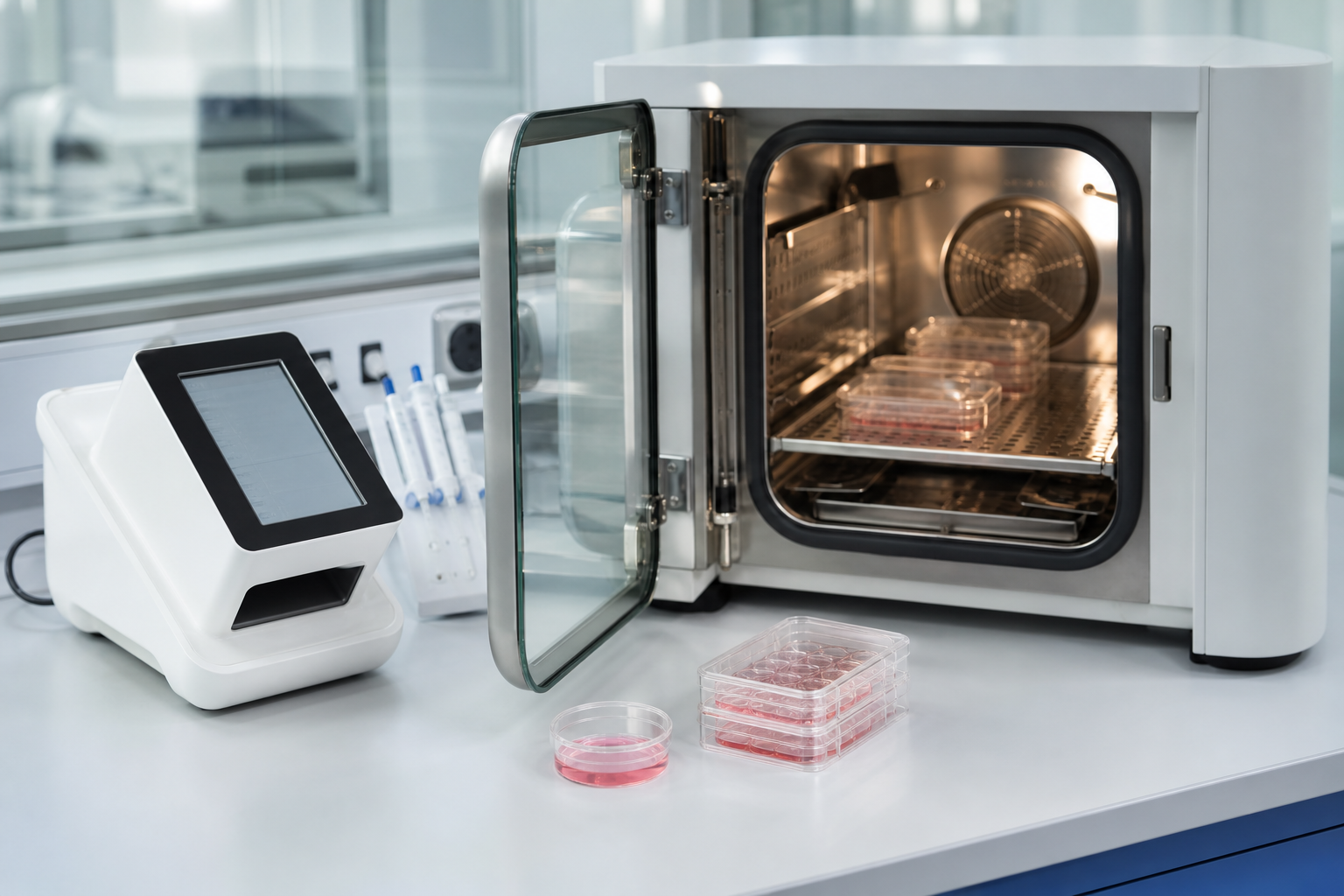
Reduced-oxygen culture is now routine in many IVF laboratories, yet oxygen control is often treated as a fixed equipment setting rather than a condition that must be verified in use. A tri-gas mixer, incubator or chamber may be set to 5% O₂, but that does not automatically mean the embryo experiences a stable 5% oxygen environment throughout handling and culture.
For clinic managers and embryologists, this distinction matters because oxygen exposure is shaped by the whole system: gas supply, delivery path, chamber tightness, vessel type, door-opening behaviour, workload and bench practice. If verification stops at the front panel, important variation can remain invisible.
Why point-of-use verification matters
Unlike CO₂ and temperature, oxygen conditions can be more difficult to judge from routine observation alone. A system may appear to be functioning normally while actual recovery after access is slow, or while repeated dish handling at room atmosphere adds brief but frequent oxygen excursions.
This does not mean every lab needs complex continuous oxygen analytics at every workstation. It does mean the laboratory should define what “oxygen control” really means operationally: not only the setpoint achieved in an empty chamber, but the oxygen level delivered to cultureware under normal loading and daily use.
Where oxygen drift commonly occurs
One common weak point is the interval between preparation and placement. Dishes may be removed from a low-O₂ incubator, handled in ambient air, and returned several times during assessment or manipulation. Each event may be short, but cumulative exposure can differ significantly between operators and between busy and quiet days.
Another source of variation is the delivery path itself. Gas blending accuracy is only one part of performance. Leaks, poorly seated tubing, delayed calibration drift in associated sensors, or inconsistent chamber purging can all affect the atmosphere that actually reaches the culture space. Even vessel geometry and oil overlay practices may alter equilibration speed.
What to verify in practice
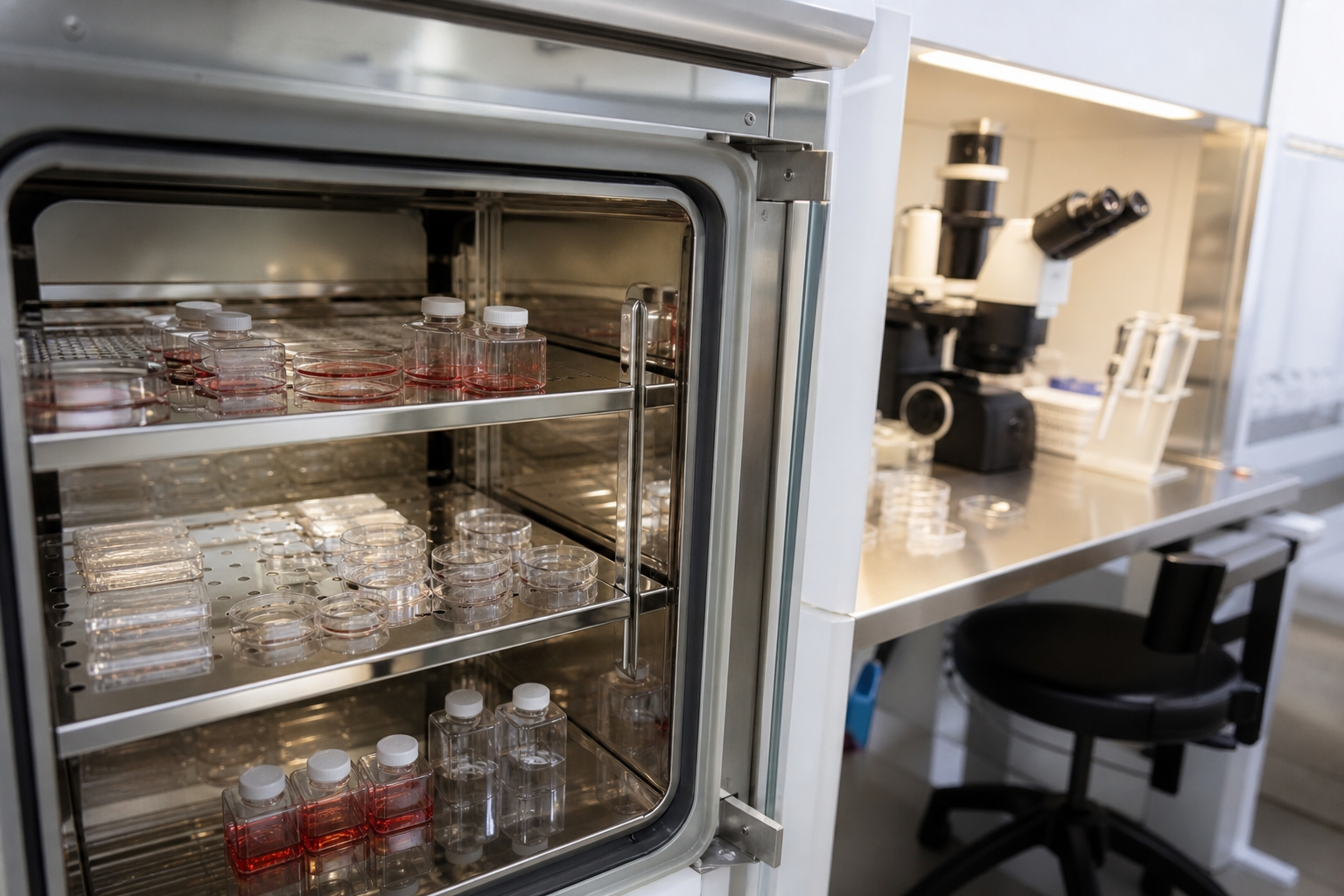
A practical verification plan should begin with loaded, realistic conditions. Empty-chamber checks are useful for installation and maintenance, but routine performance should also be assessed with normal shelf occupancy, standard culture vessels and typical access frequency. Recovery time after door opening or lid removal is particularly informative when measured under genuine workflow conditions.
Labs should also verify consistency across locations. In some systems, conditions may not be perfectly uniform from one area of the chamber to another, especially when loading patterns vary. If different incubator compartments, workstations or gas outlets are used for equivalent culture steps, they should be shown to perform comparably.
Link oxygen verification to workflow
Oxygen control should be reviewed alongside process design, not in isolation. For example, if embryo assessments are scheduled in batches, the laboratory may create longer open-door periods and more handling congestion than intended. A technically capable low-O₂ system can still underperform operationally if workflow repeatedly disrupts the environment.
Simple timing studies are often revealing. How long are dishes outside controlled atmosphere? How many times is each chamber accessed per session? Are all operators following the same sequence? These are not merely efficiency questions; they are environmental control questions with direct relevance to culture consistency.
Choose meaningful indicators
Many laboratories already trend alarms, temperatures and CO₂ values, but oxygen assurance benefits from a small number of specific indicators. These may include recovery time after routine access, pass/fail criteria for low-O₂ setpoint achievement after start-up, documented gas supply checks, and periodic confirmation that actual operating practice matches validated assumptions.
Where direct oxygen measurement at the dish level is not feasible, surrogate indicators can still strengthen control. Standardised handling times, vessel preparation protocols, and defined maximum exposure windows help reduce variability. The goal is not perfect measurement of every moment, but a controlled process with understood limits.
Training is part of oxygen control
In reduced-oxygen culture, operator technique is inseparable from equipment performance. Staff should understand why seemingly minor variations matter: prolonged microscope review, delayed dish return, unnecessary incubator access, or inconsistent workstation purging can all alter exposure.
This makes training and periodic observation important components of verification. Competence should cover not only how to operate equipment, but how to preserve the intended atmosphere throughout the task. When procedures are revised, oxygen-sensitive steps should be included in training records and effectiveness review.
Include oxygen in deviation review
If culture outcomes shift, oxygen control should be considered alongside media, consumables, incubator performance and laboratory workload. Because low-O₂ exposure is distributed across multiple steps, problems may not present as a single equipment failure. Instead, they may appear as a gradual increase in process variability.
A structured deviation review can help separate mechanical causes from procedural ones. Was there a gas supply interruption? A rise in chamber access frequency? A change in dish type, loading pattern or staffing? These are all plausible contributors and should be reviewed systematically.
A more useful question for the lab
Rather than asking, “Is the incubator set to 5% oxygen?”, a more useful question is, “How do we know embryos are consistently experiencing the oxygen environment we intended?” That question encourages validation under realistic conditions, better workflow discipline and clearer acceptance criteria.
In a modern IVF laboratory, reduced-oxygen culture should be treated as a controlled process, not just an equipment feature. tech²ART can help laboratories assess and support that process in a practical way.