Airflow Discipline in the Biosafety Cabinet: Small Behaviours That Affect Product Protection

Even a well-certified biosafety cabinet can underperform if day-to-day working practices disturb airflow where it matters most.
Why cabinet performance is not only about certification
A Class II biosafety cabinet may pass its annual tests and still deliver inconsistent protection in daily use. Certification confirms that the cabinet can perform to specification under defined conditions. It does not guarantee that airflow will remain undisturbed once operators introduce boxes, pipettes, waste bags, rapid arm movements and changing work habits.
In IVF, cell culture and other sensitive laboratory activities, product protection depends on a stable airflow pattern across the work zone. Small practical behaviours can interfere with that pattern far more than many teams realise. For managers and senior laboratory staff, this makes operator technique an important part of contamination control.
The first principle: preserve the air barrier
A biosafety cabinet works by maintaining an inward airflow at the front opening and a controlled downflow over the work surface. Together, these flows help protect the sample, the operator and the surrounding room. When the front air barrier is repeatedly broken, cabinet performance can deteriorate even if the fan, filters and alarms appear normal.
Common causes include leaning too far into the opening, resting arms heavily across the front grille, or placing notebooks, racks or packaging where they obstruct intake air. These actions can create local turbulence and allow contaminated room air to enter the critical working area. In practical terms, a clear front grille is not a housekeeping preference; it is part of the protection concept.
Layout inside the cabinet matters
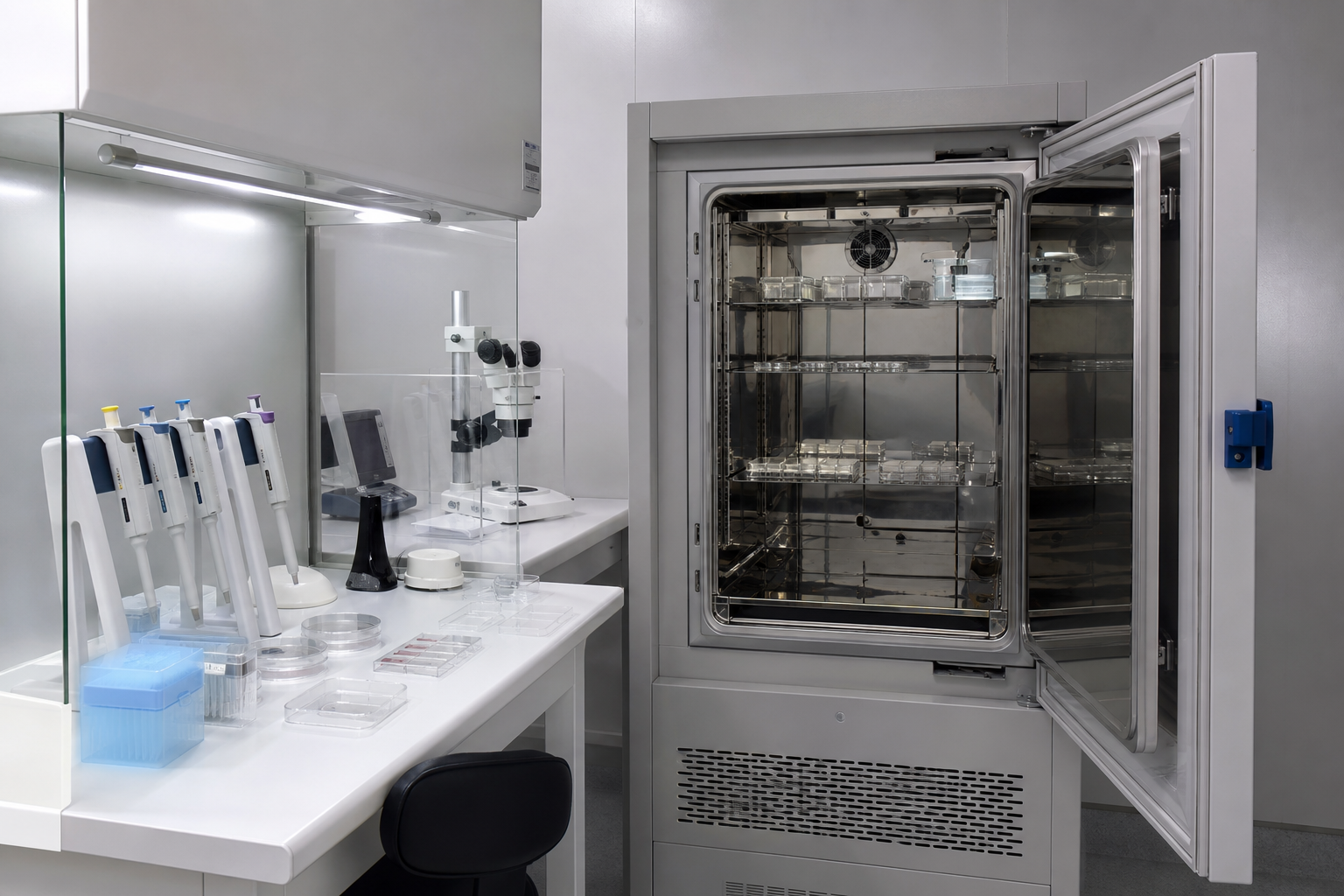
The arrangement of materials inside the cabinet has a direct effect on airflow. Large items placed centrally can shadow the downflow and create dead zones behind them. Overloading the workspace also forces operators to work around obstacles, increasing unnecessary movement and the risk of crossing clean and dirty pathways.
A simple zoning approach is often effective. Keep clean materials on one side, active manipulations in the centre, and waste or discard containers on the opposite side where they can be accessed without passing over open vessels. Low-profile items should sit in the central working field, while taller equipment should be placed towards the rear where they are less likely to disrupt the front air curtain.
Movement is an airflow variable
Fast hand and arm movements generate turbulence. So does repeatedly moving in and out of the cabinet to retrieve missing items. The effect may seem minor, but repeated disturbances during critical manipulations can increase variability in aseptic handling.
For this reason, preparation before starting work is one of the simplest risk controls. Gather required media, pipettes, disposables and labelled vessels in advance. Once work begins, slower and more deliberate movements usually support both better ergonomics and more stable cabinet conditions.
Do not ignore the room around the cabinet
Cabinet airflow can also be affected by the wider laboratory environment. Frequent traffic behind the operator, doors opening nearby, supply air diffusers directed towards the front aperture, or mobile cooling units creating drafts can all disturb the cabinet’s protective airflow.
This is especially relevant when laboratories are refurbished or equipment is moved. A cabinet that performed well in one position may behave differently in another. Room-side observations, local airflow checks and a review of nearby ventilation features are worthwhile whenever the surrounding environment changes.
Aseptic practice and airflow discipline are linked
Disinfection, glove management and material transfer are usually taught as aseptic practices, but they are also airflow-related practices. For example, spraying excessive disinfectant into the cabinet can create droplets and residues that spread contamination rather than control it. Introducing cardboard outer packaging into the work zone may also add particles and disrupt a clean setup.
Similarly, open culture vessels should only be exposed when everything is ready. Extended open handling increases the time during which any airflow disturbance can matter. Short, well-planned manipulations are generally more robust than prolonged open work with repeated interruptions.
What supervisors should actually observe
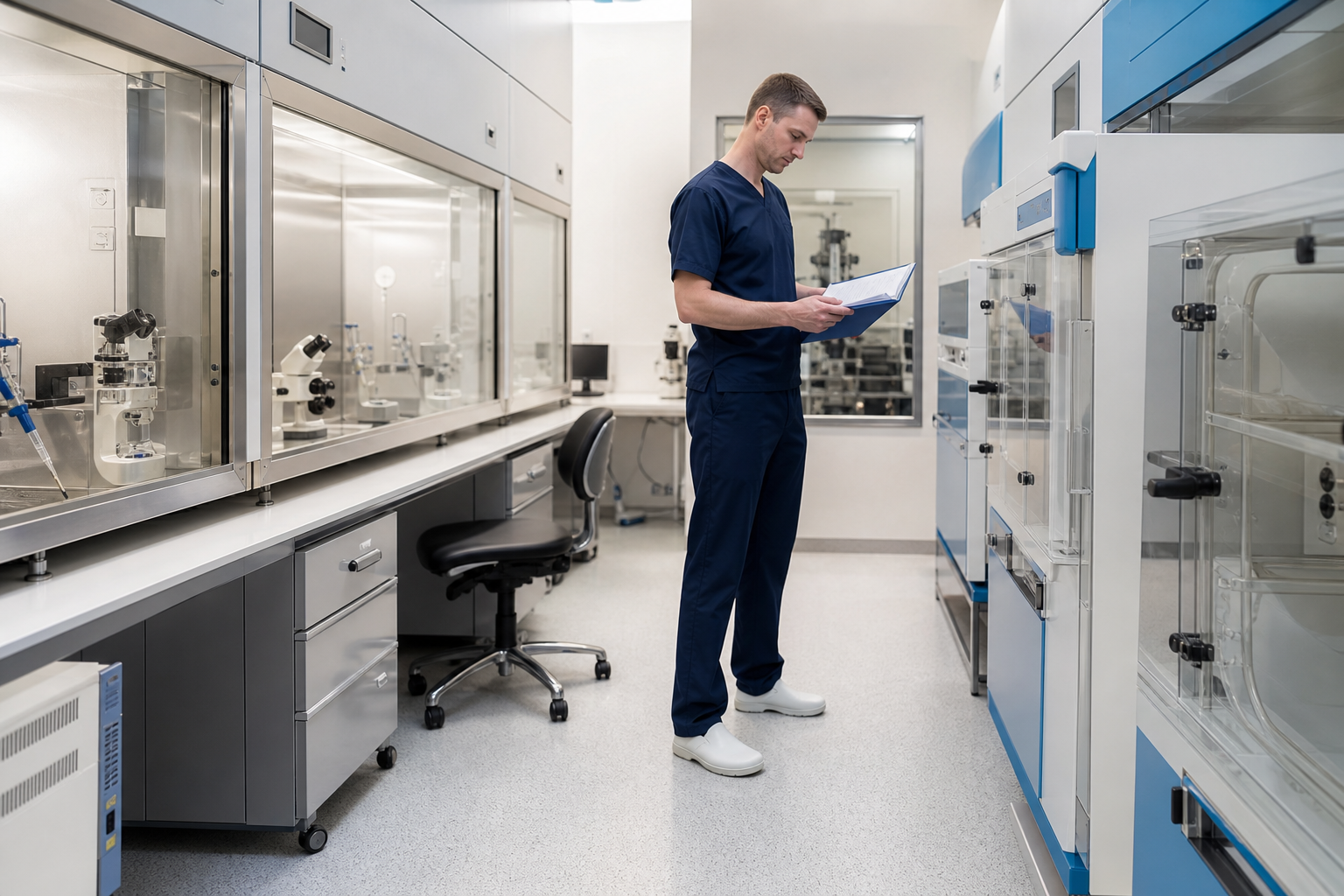
Routine oversight should include direct observation of cabinet use, not just service records. Useful questions are practical: Are front and rear grilles kept clear? Is the cabinet overcrowded? Are staff working too close to the front edge? Are clean and waste flows separated? Is material preparation reducing unnecessary in-and-out movement?
These observations often reveal opportunities for improvement that no annual certificate will capture. They are also useful for refresher training, especially in laboratories where several users share the same cabinet across different procedures and shifts.
Turn good technique into a standard
The most reliable laboratories convert preferred working habits into visible, repeatable standards. A short cabinet setup guide, a defined loading pattern for routine tasks and periodic peer observation can reduce person-to-person variation. This matters because contamination events are rarely caused by one dramatic failure; more often they arise from small deviations that become normalised over time.
When airflow discipline is treated as part of routine method control, biosafety cabinets are more likely to deliver the protection they were selected and certified to provide. That is good practice not only for compliance, but for consistency of results.
If your team is reviewing cabinet use, layout or laboratory workflows, tech²ART can help.